Your Boat Repair Shop Is Losing $4,000+ a Month to Missed Calls
A boat owner in Fort Myers turns the key on a Friday afternoon and gets an alarm instead of an engine. The boat is loaded, friends are coming down for the weekend, and the plan was Tarpon Bay at first light. He calls your shop first — you serviced the motor last spring and he trusts your work. You're under a cowling in a Cape Coral marina with a wrench in one hand and a parts washer buzzing behind you. The phone rings out to voicemail.
He calls the next shop on the list. They answer, ask what the alarm's doing, and tell him to bring it in Monday morning for diagnostics. The repair — a fuel system problem caught early — runs $2,300. If it had been worse, he was already talking repower money. The shop that answered has his boat. Yours never knew he called.
The Stats
Boat repair is a deadline business wearing a leisure costume. Nobody calls a marine mechanic to chat. They call because the weekend is in three days, the season just started, the family is flying in, or the engine did something it has never done before. A dead boat in Southwest Florida is not an inconvenience — it's the whole reason the boat exists, sitting still.
Roughly 6 in 10 inbound calls to small businesses go unanswered (BrightLocal, 2024). About 8 in 10 callers who reach voicemail hang up without leaving a message. CallRail reported in 2025 that 82 percent of callers move on to a competitor after one missed call, and 78 percent have permanently abandoned a business after an unanswered call.
That matters on the water. Boat owners talk at every marina, ramp, and bait shop in Lee County. The shop that answers on a Friday afternoon gets recommended for years. The shop that didn't gets skipped.

What One Missed Call Is Worth
Diagnostics and a mid-size repair — fuel, cooling, electrical, a lower unit service — run $800 to $3,000. A major repair with parts runs $2,000 to $6,000. A repower, new outboard rigged and ready, runs $8,000 to $15,000 and up, and repower conversations usually start with exactly the kind of phone call described above: an old motor, a warning alarm, an owner doing math.
The seasonal work stacks behind it. The shop that gets the spring service calls gets the summer repairs, the fall maintenance, and the first call when something breaks. One customer is rarely one job.
Now run a conservative month. Say you miss just 6 real inquiries during the busy season — a few in the yard, a few at the marina, one on the Friday afternoon that mattered most.
Say only 2 were serious. One repair at $2,300, and — every few months — one repower at $11,500 that started as a diagnostic call somewhere else. Spread that repower across the quarter and add the steady repairs, and the monthly average of what missed calls cost you clears $4,000. That's before the dockside referrals a running boat produces.

Why It Keeps Happening
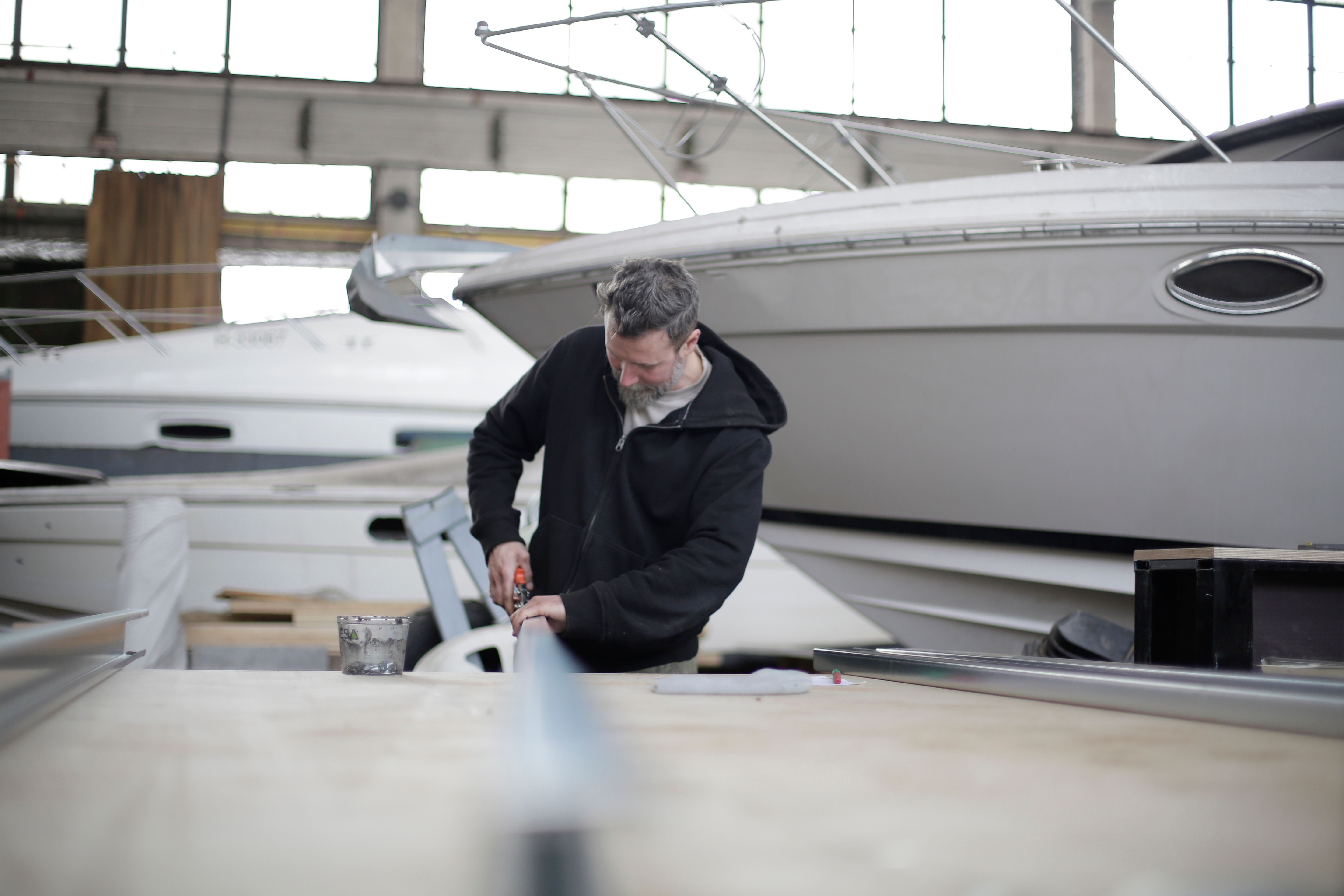
You're in an engine bay all day. Marine work is noise, grease, and both hands inside a cowling. The owner of a small repair shop is usually the lead mechanic, not a person sitting at a service desk. Nobody pulls out from under a motor mid-diagnosis to answer a ring.
Half the work happens off-site. Marina calls, dockside service, sea trials, parts runs to the distributor. On the days the shop is out working on boats where the boats live, the phone at the counter rings to an empty building.
The rush is seasonal and it hits all at once. Spring commissioning, the start of season, the week before every holiday weekend — the calls bunch up exactly when the shop is already booked solid, and the phone setup that survives February collapses in April.
Boat owners call down the list. A man with a dead engine and guests arriving Friday does not leave a message and wait. He calls shops until one of them gives him a day to bring the boat in.
The Fix
An AI receptionist answers your phone on the first ring, 24 hours a day, so the owner with the alarm going off reaches a live voice instead of voicemail — even on Friday afternoon, even while you're under a cowling in Cape Coral.
She takes the intake your shop actually needs. Name, phone number, and where the boat is — your yard, a marina, a lift behind a house. Boat and engine: make, model, year, horsepower. What's it doing — alarm, no-start, overheating, running rough — and whether there's a deadline driving it, like guests this weekend or a trip next week, because that changes how the job gets scheduled.
She books the diagnostic drop-off or the service visit straight into your calendar. You get a text with the full details the moment the call ends — boat, motor, symptom, location, deadline. She explains that nobody can diagnose a motor honestly over the phone, without guessing at a cause or quoting a price sight unseen.
She also catches the calls that fill the slow weeks: the seasonal service bookings, the new boat owner looking for a shop before anything breaks, the marina neighbor who got your name at the dock.
You stay under the cowling. She makes sure the next boat is already booked when this one splashes.

Run Your Own Numbers
Do the math on your own missed calls.
Put in your average job value and how many calls you miss in a typical week.
Then look at https://voiceanna.com to see how it works.
Then call (386) 334-2561 and ask for Anna. She's an AI receptionist — hear for yourself.
About the author — Scott Riefler is the founder of VoiceAnna, the AI receptionist that helps small businesses stop missing calls. Learn more at voiceanna.com or call (386) 334-2561 and ask for Anna.


Comments
Post a Comment