Why Roofers Can't Afford to Miss a Call During Storm Season
The hailstorm hits on a Wednesday afternoon. Golf-ball hail, twenty minutes, half the roofs in the neighborhood damaged. By Thursday morning, every homeowner on the street is on the phone.
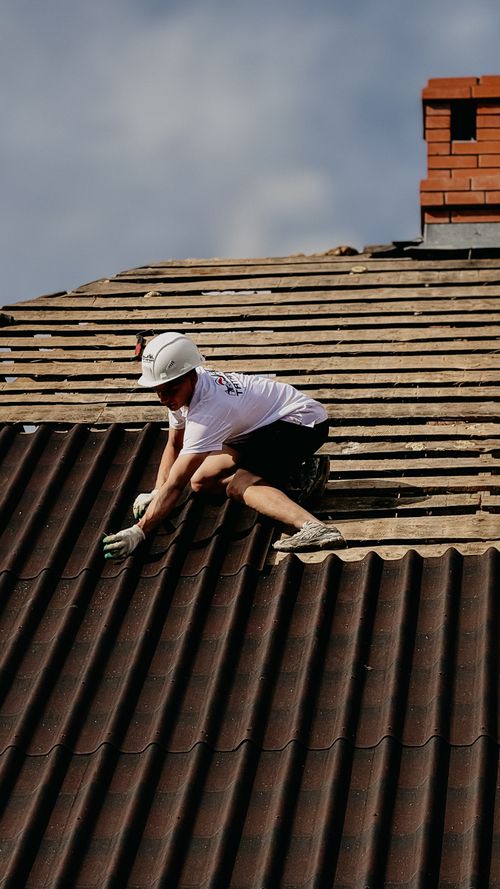
They're calling roofers. All of them. At once.
Your crews are already on roofs — they can't answer. Your office manager is fielding calls from existing jobs, insurance adjusters, and suppliers. Your phone is ringing off the hook, and half those calls are going to voicemail.
Every one of those voicemails is a $15,000 roof going to the competitor who answered.
Storm season is the Super Bowl for roofing companies. It's also when most of them fumble the phone — right when each call is worth the most.
The Stats
Storm-chasing callers are the most impatient callers in home services:
- Roughly 6 in 10 inbound calls go unanswered (BrightLocal, 2024). During a storm surge, with call volume 5x normal, it's far worse.
- About 8 in 10 voicemail callers hang up without leaving a message.
- 82% of callers phone a competitor after one unanswered call (CallRail, 2025).
- 78% of people have abandoned a business entirely after an unanswered call (CallRail, 2025).
After a hailstorm, a homeowner doesn't call one roofer. They call five. The first two that answer get the inspections. The rest get nothing.
The Math: What One Lost Call Actually Costs
Roofing tickets are enormous, and storm work carries premiums on top. The math is ugly.
Repairs vs. replacements. A repair runs $500 to $2,000. A full replacement runs $10,000 to $30,000 depending on size, pitch, and material. Storm damage skews heavily toward replacements — hail totals a roof the way it totals a car.
Scenario 1: The storm surge. A hailstorm hits your service area. Over the next two weeks, your company gets 300 calls. Your team, built for 60 calls a week, answers maybe half. That's 150 missed calls. If 20% of those would have become inspections and half of inspections become jobs at a $14,000 average — that's 15 lost roofs, or $210,000 in revenue from one storm. One storm. The kind of event that happens multiple times a season in hail country.
Scenario 2: The Florida hurricane angle. In places like Naples, Florida, hurricane season runs June through November, and every tropical system sends a wave of damage claims through the area. Wind-lifted shingles, water intrusion, full tear-offs. Insurance jobs pay well and come in clusters — one damaged neighborhood means twenty roofs on the same street. The roofer who answers first gets the street. The roofer who answers first gets the referrals from every neighbor watching the work happen. Miss the first call on a storm-damaged street and you don't lose one roof — you lose the whole street.
Scenario 3: Insurance work premiums. Storm damage means insurance claims, and insurance jobs are the best jobs in roofing: the scope is documented, the adjuster has already been out, the homeowner isn't price-shopping because insurance is paying. A missed insurance-job call isn't just a lost roof — it's a lost easy roof, the kind with the fattest margins and the least sales effort. Ten missed insurance calls after a storm at $16,000 average is $160,000 in high-margin work.
Scenario 4: The slow-season cost of a missed summer call. Here's the part roofers forget. A roof you sell in storm season gets installed in storm season, and the crew stays busy, and the reviews roll in, and the referrals compound into fall. A missed storm-season call doesn't just cost one job — it costs the crew utilization, the review, and the three neighbor referrals that roof would have generated. The true cost of a missed $15,000 roof is closer to $25,000 when you count the downstream work.
Even in a normal month, the math is brutal: miss 10 replacement inquiries a month, close a third at $13,000 average, and that's $43,000 a month in lost revenue. During storm season, multiply that by three or four.
Why It Keeps Happening
Roofing companies are built to install roofs, not answer phones. Storm season exposes every weakness at once.
Crews are on roofs. Your best people — the ones who can actually talk to a homeowner about their damage — are 30 feet in the air, hammering. They can't take calls. Their phones are in the truck.
The office drowns in the surge. A storm multiplies call volume overnight. The office staff that handles a normal week can't handle a storm week. They triage existing jobs because those feel urgent, and new inquiries pile up in voicemail. But the existing jobs are already sold. The voicemails are new money.
Storm chasers answer faster. Out-of-town storm chasers descend on every hail event with dedicated call centers. They answer on the first ring because answering the phone is their entire business model. Your local reputation doesn't matter if you don't pick up — the homeowner hires whoever shows up first.
Nights and weekends are peak calling time. Homeowners discover roof damage when they get home from work, or when the next rain comes through on a Saturday and water starts coming through the ceiling. They call at 7 PM. They call on Sunday. Your office is closed. The storm chaser's call center isn't.
"We'll get to it Monday" doesn't work. Storm damage is urgent and emotional. Water is coming in. The homeowner is scared. They are not waiting until Monday. They are hiring someone today, and "today" means whoever answered.
The Fix
You need a phone that answers on the first ring during a hailstorm surge — all 300 calls, not just the 60 your office can handle. It needs to capture the address, the damage description, the insurance situation, and book the inspection. It needs to do it at 8 PM on a Saturday when water is coming through someone's ceiling.
An AI receptionist does exactly that. Infinite capacity — the 300th caller gets the same instant answer as the first. Every storm inquiry becomes a booked inspection with photos requested and insurance details captured. Your office staff handles the jobs; the AI handles the surge. Monday morning, your team walks into a full inspection schedule instead of a voicemail disaster.
It costs less per month than the profit on a single shingle repair. Compare that to the $200,000+ a single storm's missed calls can cost you.
Run Your Own Numbers
Think about your last storm event. How many calls came in? How many did you actually answer?
Free calculator: https://tinyurl.com/287dqqha
Then see how it works at https://voiceanna.com.
Then call (386) 334-2561 and ask for Anna. She's an AI receptionist — hear for yourself.
About the author — Scott Riefler is the founder of VoiceAnna, the AI receptionist that helps small businesses stop missing calls. Learn more at voiceanna.com or call (386) 334-2561 and ask for Anna.


Comments
Post a Comment